
Classroom
Flow
Three teams, one locked room, sixty minutes. No team holds enough of the puzzle to finish alone.
- Format
- Classroom
- Duration
- 60 minutes, half day with debrief
- Participants
- 5–50 in 3 teams
- Languages
- EN PT ES
- In partnership with
- MyndherThe in-person version, inspired by Myndher's game The Divergents.
The premise
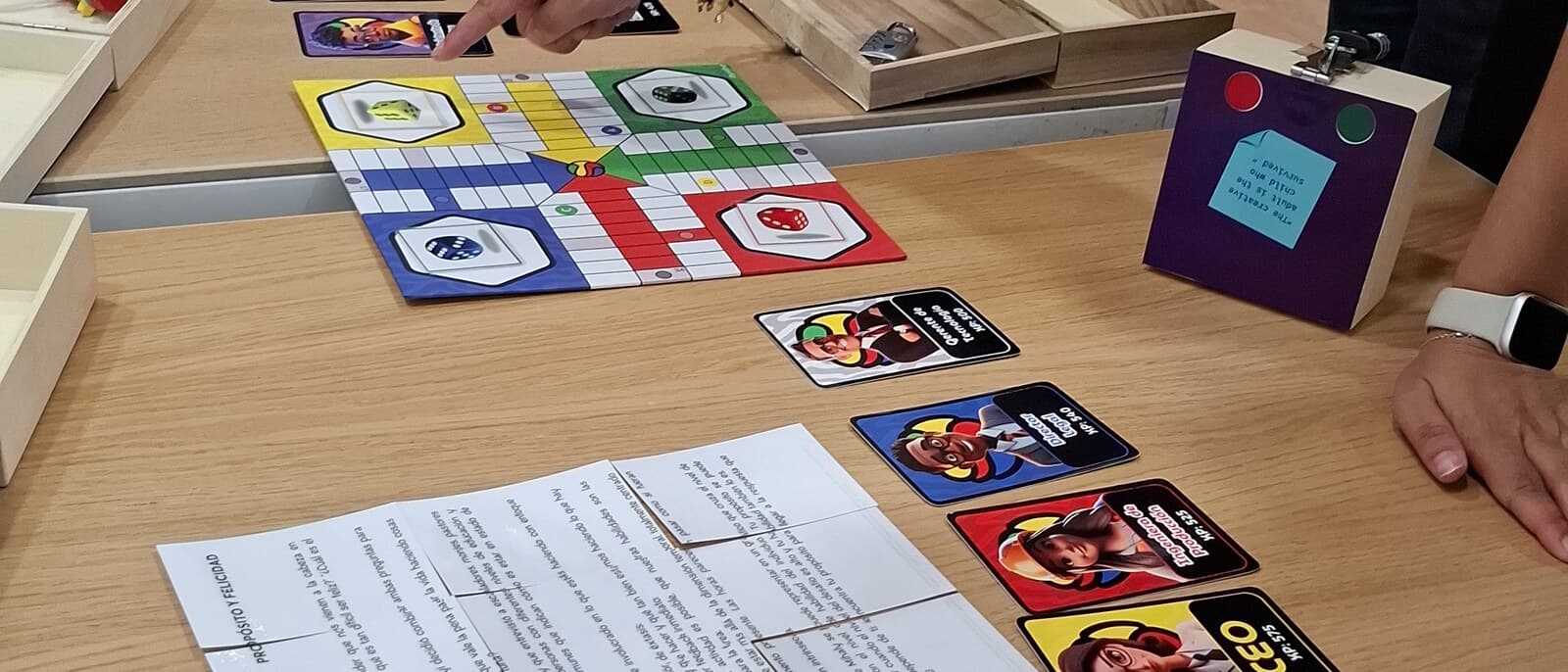
In the future, machines have taken over and human creativity has all but disappeared. Agents are sent back in time to find the people who can still think differently.
You are locked in the room for sixty minutes. Three teams work separate tables, each with its own boxes, its own padlocks and its own fragment of the answer — and one or more Game Masters move among you, in character, releasing hints.
No team holds enough to finish alone. The clock is the only thing you all share.
What participants do
Three tables, one room
Teams work apart but in sight of each other. Everything needed to finish exists in the room, and almost none of it is on your own table — so the question becomes how long you work in isolation before you go and ask.
Physical locks, not an app
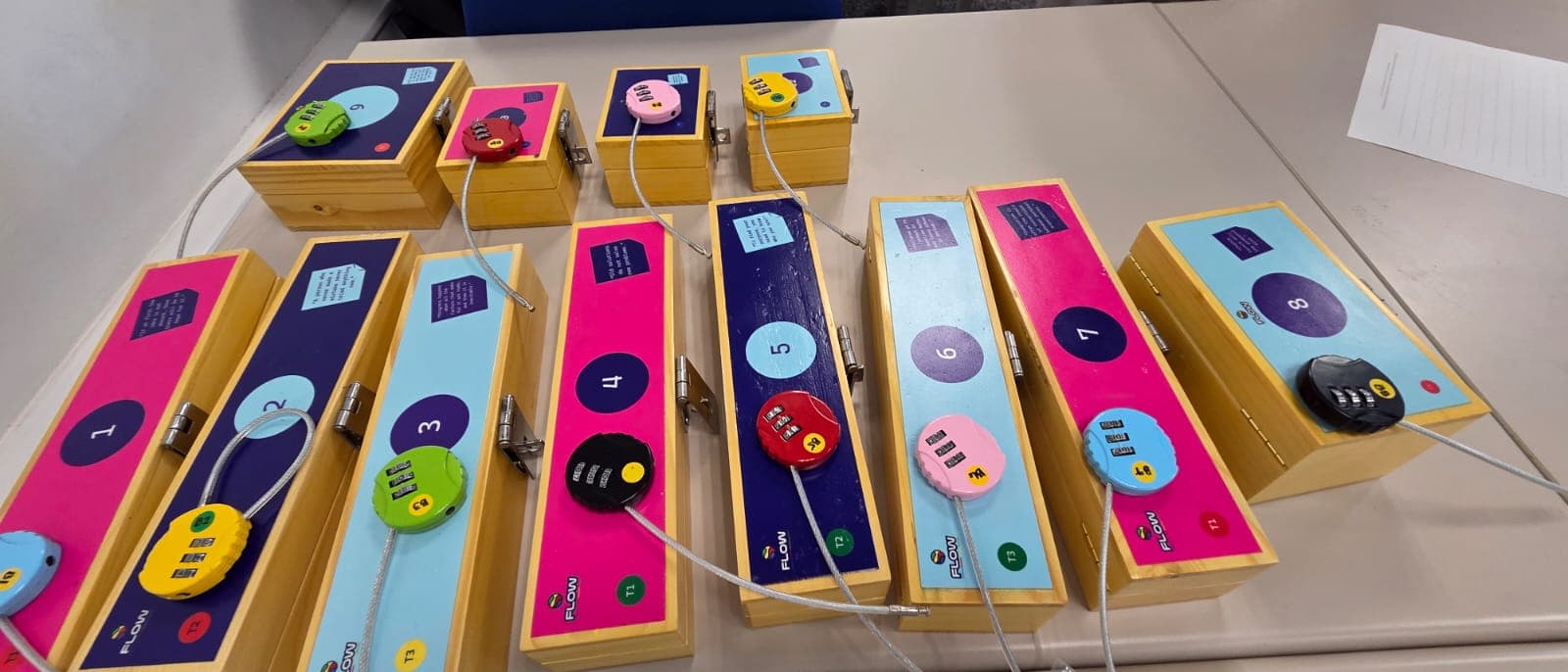
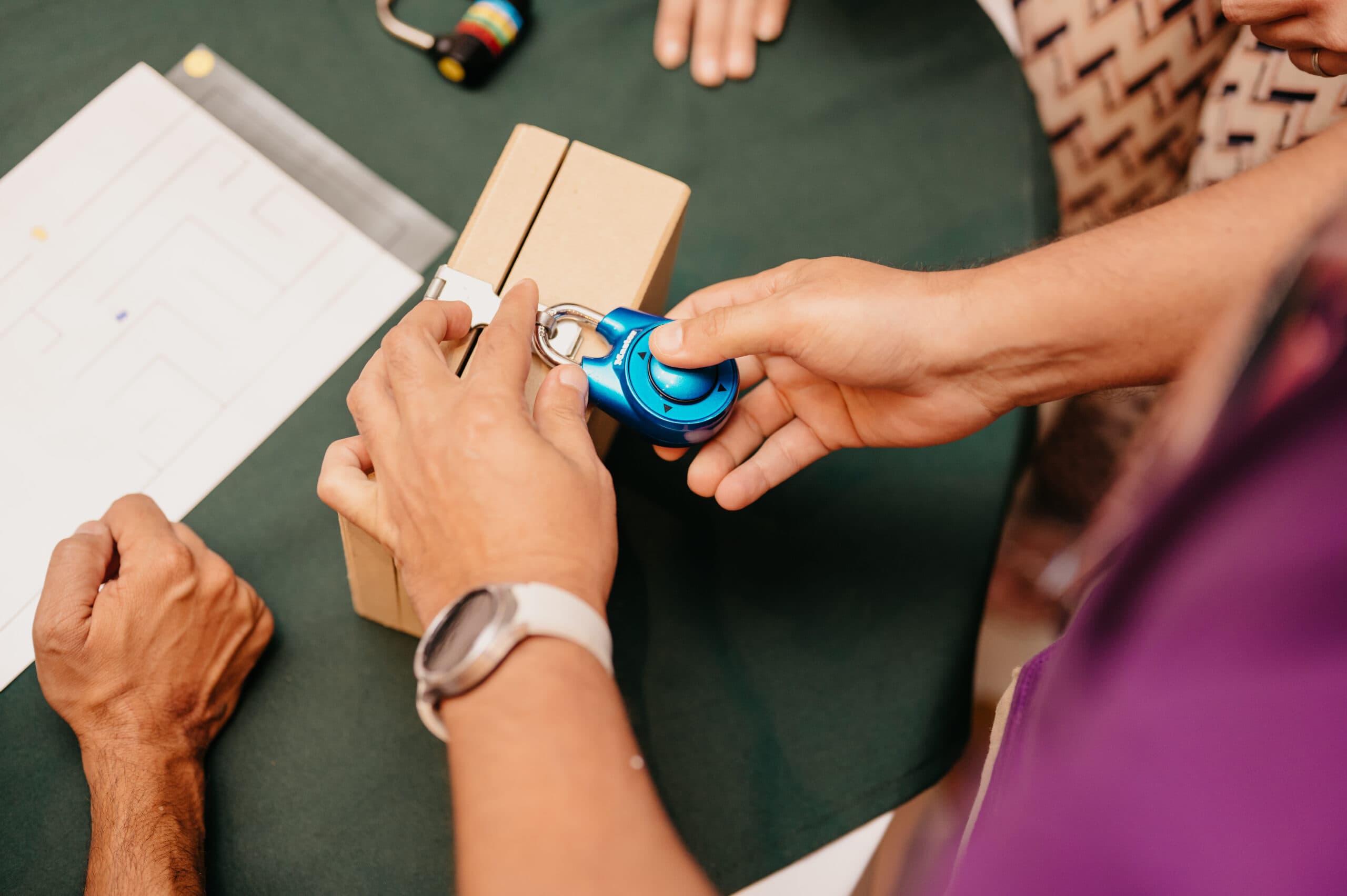
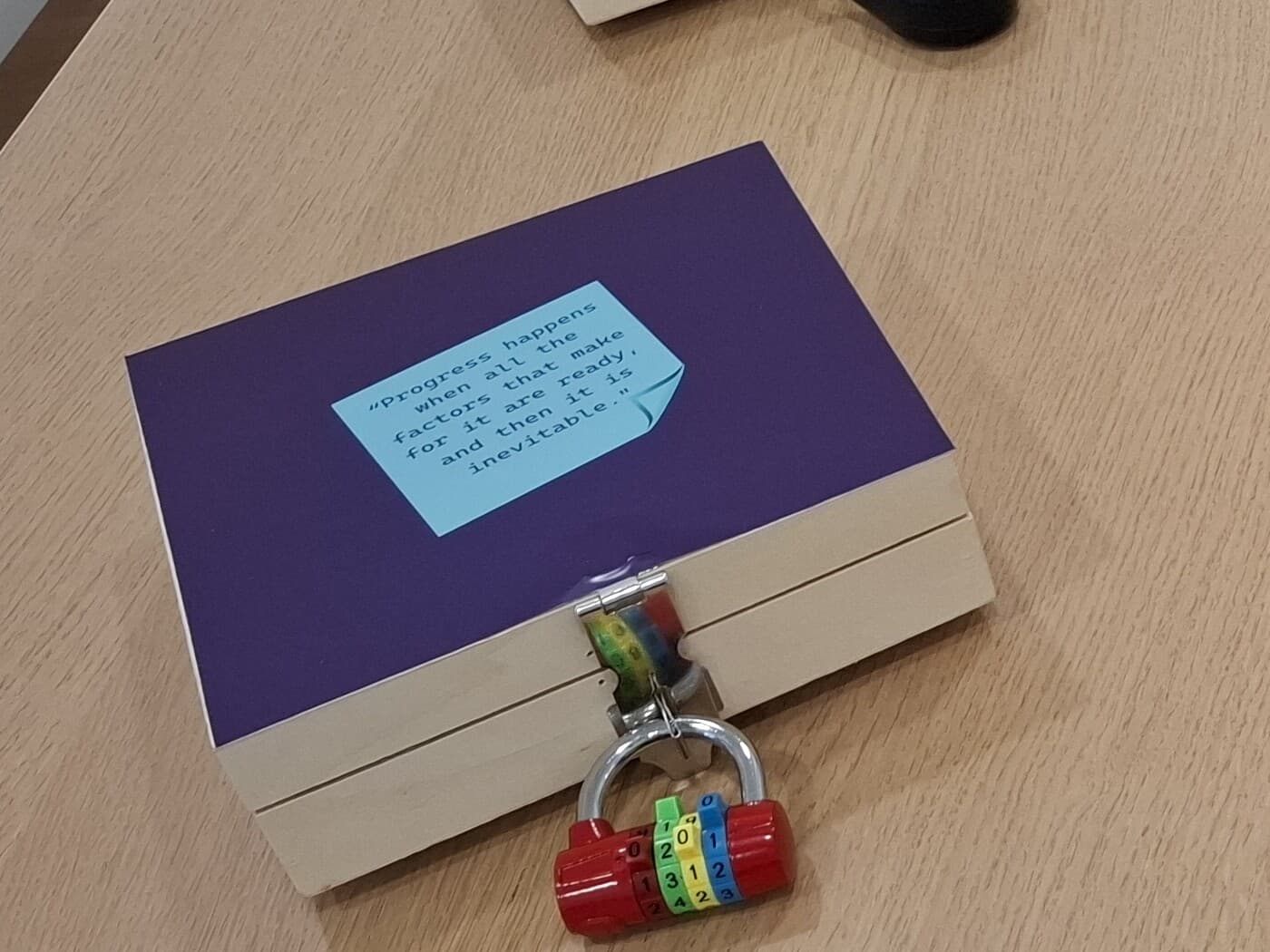
Boxes, printed artwork, directional and combination padlocks, and a UV torch that reveals what plain light does not. A wrong answer does not buzz — the lock simply does not open.
Puzzles that need all three teams
One riddle hands each team a transparency. Only laid over each other do the three reveal the maze, and only then can any team read the route that opens its own lock.
Facilitators in character
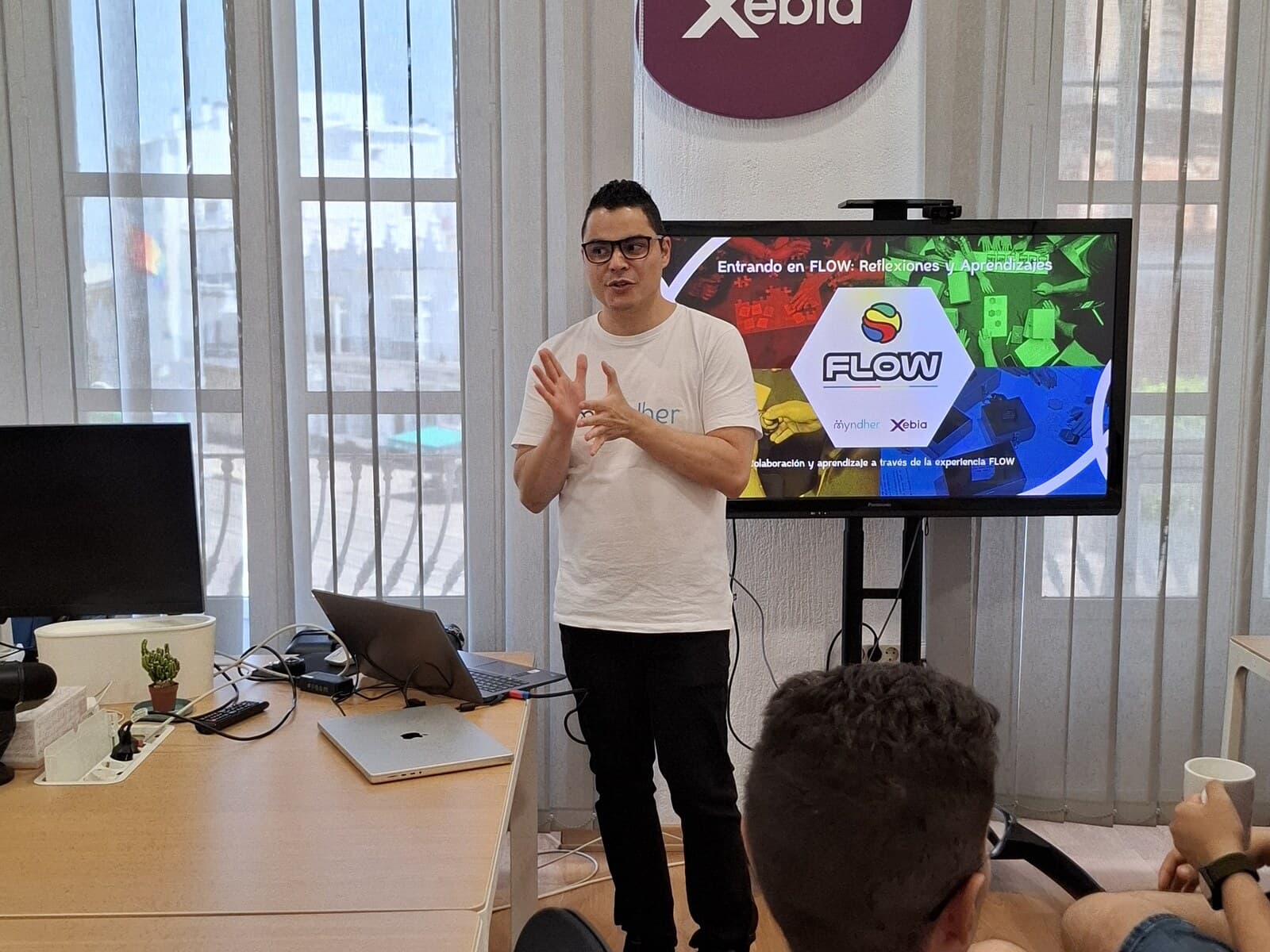
Facilitators play a role inside the story rather than standing outside it, guiding with hints and scripted interventions timed to keep the room moving without solving it for them.
What it looks like
What they leave with
Asking sooner than feels comfortable
The teams that finish are the ones that broke table boundaries early. Most groups wait far longer than they should, and the debrief puts a number on what that hesitation cost.
Defining the problem before solving it
The opening puzzle is built on Design Thinking’s first two stages. Teams that rush to answers without agreeing what they are actually looking at lose the most time here.
Finding more than one route
We are trained to produce the single correct answer. Several puzzles have no single obvious path, and groups have to unlearn the reflex of stopping at the first idea that works.
Using intuition alongside logic
Some locks yield to systematic reasoning and some only to a hunch. Participants notice which mode they default to, and what it costs when the puzzle calls for the other.
Treating creativity as trainable
The session argues, and then demonstrates, that creative capability is developed rather than innate — which is the reframe most participants carry out of the room.
Generating ideas without performing
A closing brainwriting sequence separates producing ideas from defending them out loud, so quieter contributors are not filtered out by the loudest voice.
How a session runs
The full format, in order. Half-day versions cut rounds, never the debrief.
- 01
The story opens
- 02
The clock starts
- 03
Progress stops
- 04
Timed hints
- 05
The closing stretch
- 06
Open or not
- 07
Debrief
Inside the box
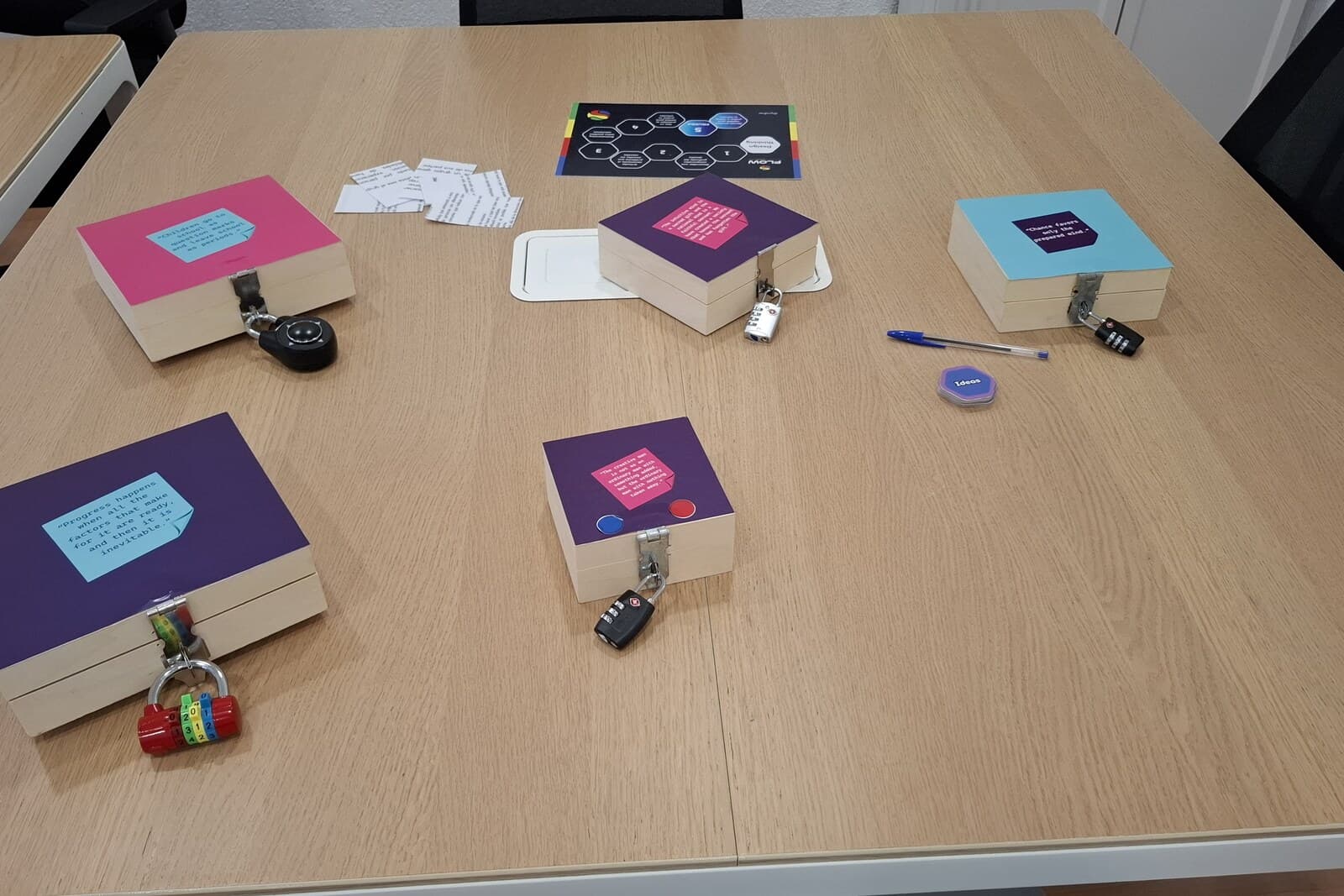
- 01Nine numbered wooden boxes, each printed with a quotation and sealed with its own padlock
- 02Padlocks in three mechanisms — directional, combination and letter — so no single technique opens the set
- 03UV torch and hidden-ink elements, one per team
- 04Transparency overlays which mean nothing alone and resolve when combined across teams
- 05Countdown timer and the storytelling video that opens the session
- 06Three table sets, one per team, each holding a different fragment of the answer
- 07Game Master guide: hint scripts, release timings, and the character the Game Master plays inside the story
- 08Debrief deck covering all eight themes, with the puzzle each one attaches to
- 09Reset checklist, because a set returned out of order costs the next session its opening
Debrief and measurement
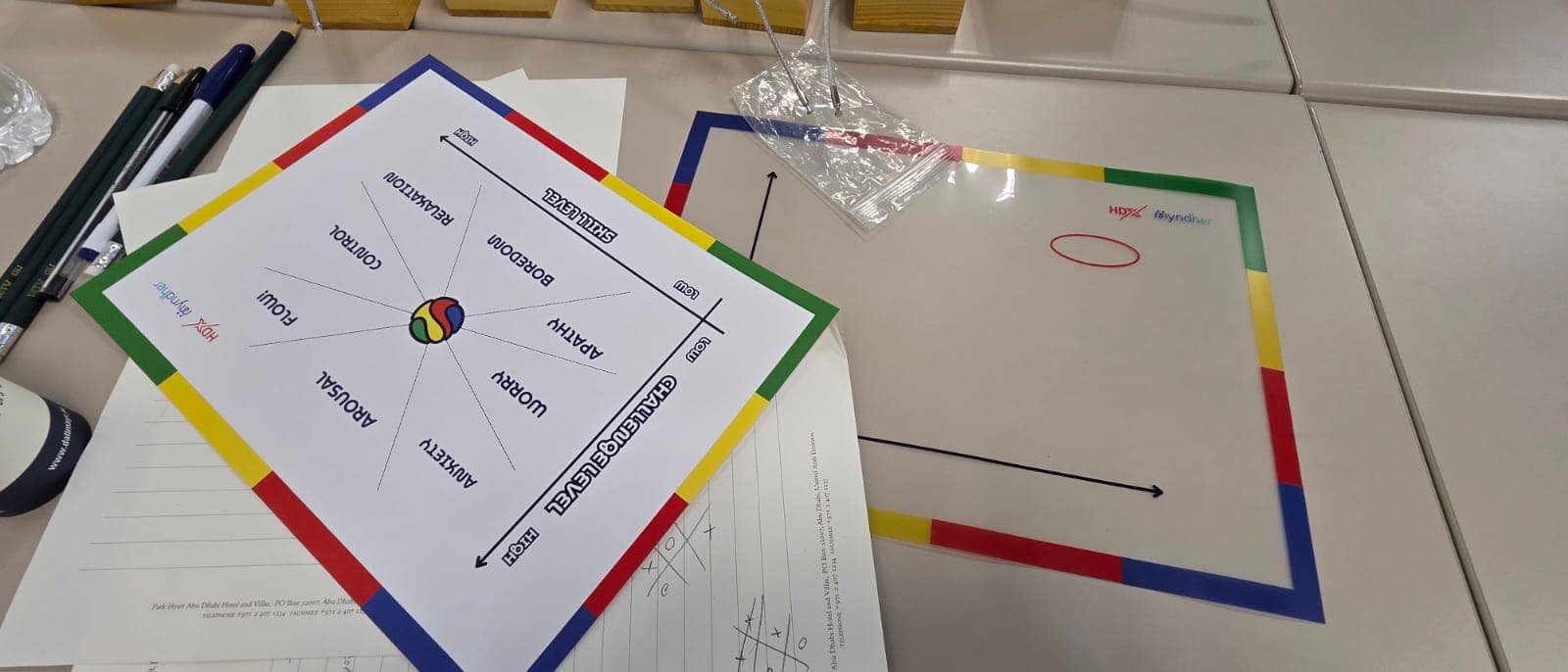
The debrief is the second half of the session and works puzzle by puzzle, because each one was chosen to carry a theme: defining the problem, finding more than one route, the theory of flow itself, whether creativity can be developed, being a generalist, and logic against intuition.
Facilitators anchor each theme to what the room actually did — who asked for help and when, which table hoarded, which lock stayed shut longest — so the ideas land on the group’s own behaviour rather than in the abstract.
Who it’s for
- Cross-functional teams that rarely work together directly
- Groups where communication is the named problem
- Offsites needing a short, high-intensity centrepiece
- Organisations asking people to work more creatively
Designer’s note
Flow is the in-person version of a game Myndher built, and what we kept was the constraint: three teams, three sets of boxes, and no team holding enough of the answer to finish alone.
Escape rooms usually fail as learning because the pressure produces one loud person and four spectators. Splitting the puzzle across tables changes who has to move. A team that solves its own boxes and stops has not finished — it has arrived at the moment where it must cross the room and say out loud what it does not know.
That is the hard part and it is the entire point. Teams wait far longer than they should before asking. Sixty minutes is short enough that the hesitation is measurable: the groups that finish are the ones that broke the table boundary early, and the debrief has the timings to prove it rather than assert it.
The Game Masters stay in character and release hints on request, never on a schedule. Asking costs nothing except admitting you need to. Most teams still do not.
Fernando Mendes, HDX Simulations
When another HDX title fits better
Flow is not the answer to everything. If one of these describes your situation more closely, start there instead.
| Title | Participants | Time | Type | Theme |
|---|---|---|---|---|
| Falcon Eye | 15–500 | Half or full day | Immersive experience | collaboration, strategy |
| Flow | 5–50 in 3 teams | 60 minutes, half day with debrief | Immersive experience | collaboration, change |
| Shift | 2–16 | Virtual 6 hours, classroom 1 day | Digital | change |
| Rooted | 12–25 in 3–5 teams | 90 minutes, half day with debrief | Physical | org design, strategy |
| Everest | To be confirmed | To be confirmed | Digital | leadership, strategy |
| Navigator | To be confirmed | To be confirmed | Digital | leadership |
- Classroom
Falcon Eye
You have more than fifty people, or the collaboration problem runs across more than three groups. Falcon Eye scales to 500 and handles many-sided negotiation.
- Virtual and Classroom
Shift
The blockage is attitudinal rather than structural — people who understand what is being asked and are not moving. Flow shows a group it cannot finish alone; Shift addresses why an individual stays put.
Questions
Do we need a purpose-built escape room?
No. Flow runs in the space you already have — an office, a meeting room, a hotel room or an auditorium. Set dressing can be added if budget allows, but nothing about the game depends on it.
How many people can take part?
Five to fifty, split across three teams. The cross-team dependency is the point, so very small groups lose the mechanic that makes it work.
How long does it take?
The game itself is sixty minutes. With briefing and the full debrief it is a half-day session, and the debrief is where most of the transfer happens.
Is this digital or physical?
Physical. Boxes, printed artwork, padlocks and a UV torch. There is no app to install and no screen between participants and the puzzle.
What happens if a team does not escape?
Roughly as much learning, often more. The debrief works from the decisions made rather than the result, and a room that ran out of time usually has the clearer story about why.
Which languages are available?
English, Portuguese and Spanish.
Can the content be tailored?
Yes. The themes are selected in advance with the client, and the final message in the last box is written for the specific group.
What if a team does not finish in sixty minutes?
Roughly a third of groups do not, and the session does not need them to. A room that runs out of time while still working as three separate teams gives you a better debrief than one that opened the last box with ten minutes to spare. The Game Master's timed hints are calibrated to keep a stuck team moving, not to guarantee an ending.
Do we need a purpose-built escape room?
No. Flow runs in an ordinary meeting room with three tables far enough apart that teams cannot read each other's materials. There is nothing to install, nothing to wire and nothing to book. The locks are real locks and the room is your room, which is also why it travels to a client site without a venue negotiation.
Who plays the facilitator role?
A certified facilitator, in character, inside the story. This is not a host reading hints off a card — the Game Master has a role in the premise and the hints arrive as part of it. It is the single largest difference between a session that holds a room and one that feels like a corporate icebreaker, and it is the part certification spends most time on.
Where Flow fits
Worth reading first
- How many people should be in the room?
What group size actually changes
Twelve, forty, two hundred. The same simulation produces a different intervention at each, and the number in the brief is usually treated as a logistics detail.
5 min read - How should a debrief be structured?
How to debrief an experiential session so the learning sticks
The game is not the intervention. The forty minutes after it are, and most facilitators spend them summarising instead of asking.
5 min read - Physical or digital?
When a physical game beats a digital one
Screens scale and travel. Objects create a different kind of evidence, and there are specific briefs where cardboard outperforms software.
4 min read
Are you a training provider?
License Flow and deliver it under your own brand. We generate client demand and route it to the partner who owns that market.